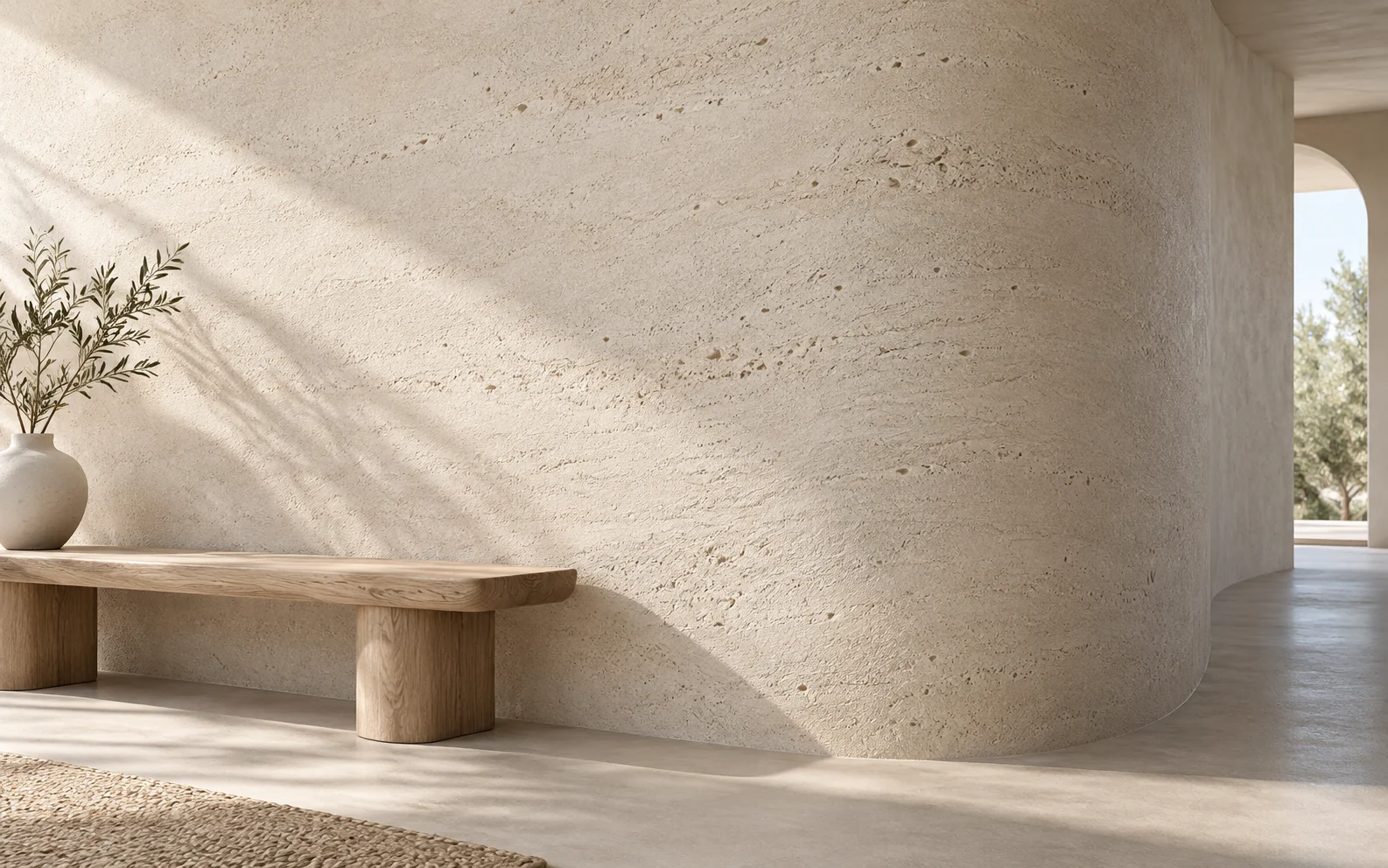
MCM flexible stone is a mineral-based finish made through modification and composite forming processes. It presents travertine, rammed-earth, rockface and other textures as a flexible finish, offering a different material direction from panels designed with a fixed relief profile.
YEYU now lists an independent MCM collection alongside its separately displayed PU wall panels. Begin by distinguishing the material base, flexibility of the finished product and surface appearance. They are connected, but containing minerals, bending and looking like stone describe different things.
Cover: Illustrative concept: a mineral-looking finish continuing around a broad curve
1. Mineral-based does not mean a slab of natural stone
MCM commonly stands for Modified Clay Material. PHOMI's technology description explains a process in which mineral raw materials are processed, modified and formed into composite finishes. This helps explain the category. The minerals, binding system and surface used in a particular product still require its own information.
A composite finish has a different construction from a slab quarried and cut from natural stone. Mineral-based also does not mean a product contains only one mineral or no other components. The name cannot establish formulation ratios, environmental classifications or fire performance.
Likewise, a travertine texture describes an appearance; it does not turn the product into natural travertine. Wood and textile textures are also visual treatments. Identify the material before judging the sample, so expectations about a familiar material's feel and performance are not transferred automatically to another product.
2. Flexibility depends on the complete construction
Solid natural stone and a thin mineral-based composite differ in their material organisation and cross-section. Consider the binding system, thickness, relief and any backing actually present together. The front texture alone cannot tell you how the whole sheet can deform.
For design, flexibility offers the possibility of continuing a suitable finish around a curve. When moving from a flat wall to a column, for example, compare MCM products appropriate to that curve. Examine the lines, edges and joints after bending, beyond a small piece bent in someone's hand.
A radius, concave or convex profile and panel direction describe the requirement more clearly than a bending angle alone. The same angle can describe arcs of different sizes. For a tighter curve, check the model's permitted conditions and assess the result with a complete mock-up.
3. Understand wall character through the listed textures
YEYU's MCM catalogue includes travertine and porous textures, rammed earth, linear and fluted textures, rockface and layered textures, concrete and smooth textures, textile and woven textures, wood looks, and leaf-vein and bamboo-node textures. Decide whether pores, grains, horizontal layers or regular lines should define the wall.
With solid-colour travertine-look flexible stone G0001, start with the distribution of pore-like details, background colour and spacing. A detail you like in a small sample still needs to be considered against the panel format and viewing distance on a whole wall.
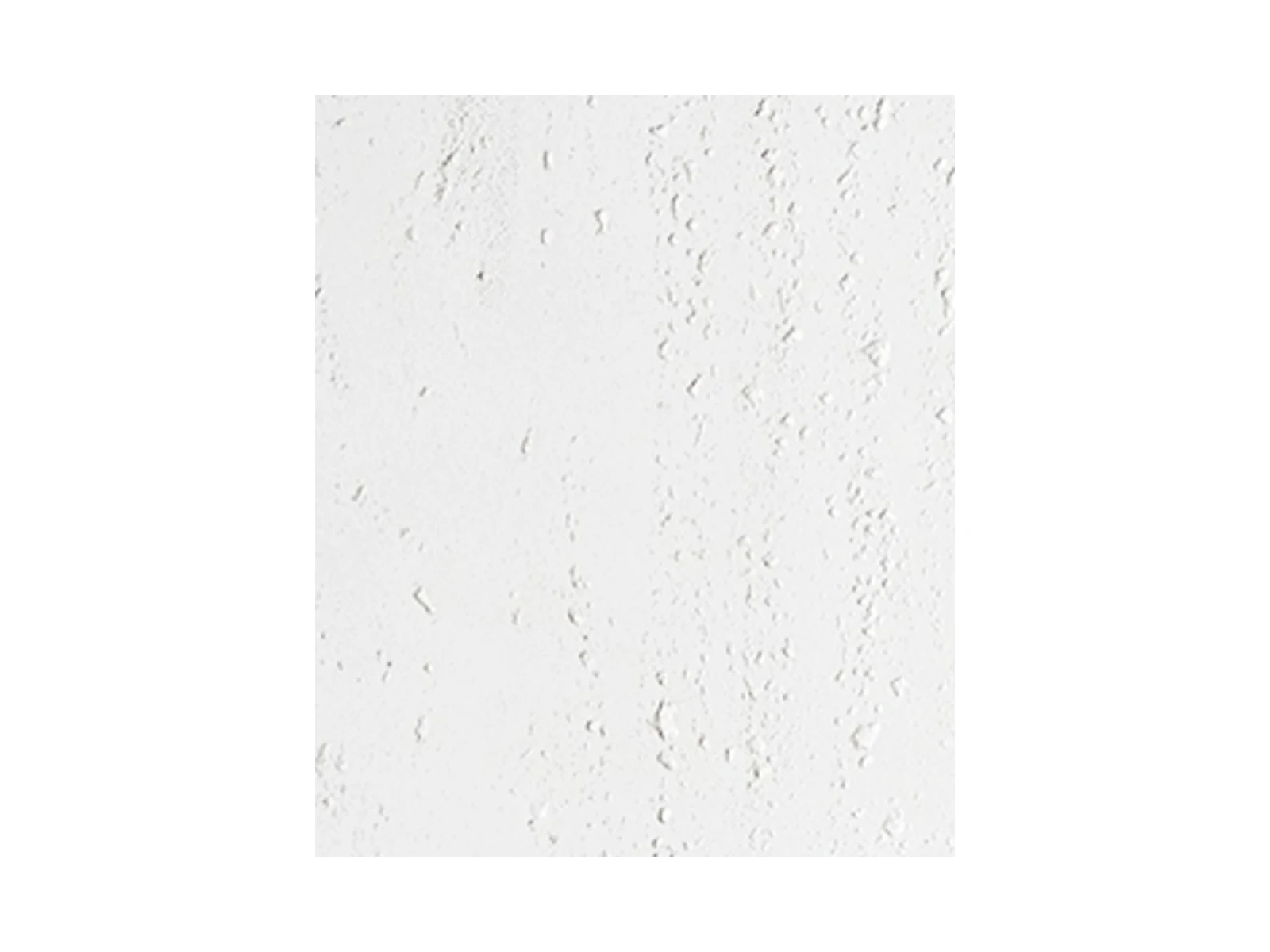
For fine rammed-earth-texture flexible stone G0042, compare the grains and tonal changes with neighbouring timber finishes and flooring. Use it to judge layering and overall colour, rather than assuming it has the construction of an actual rammed-earth wall.
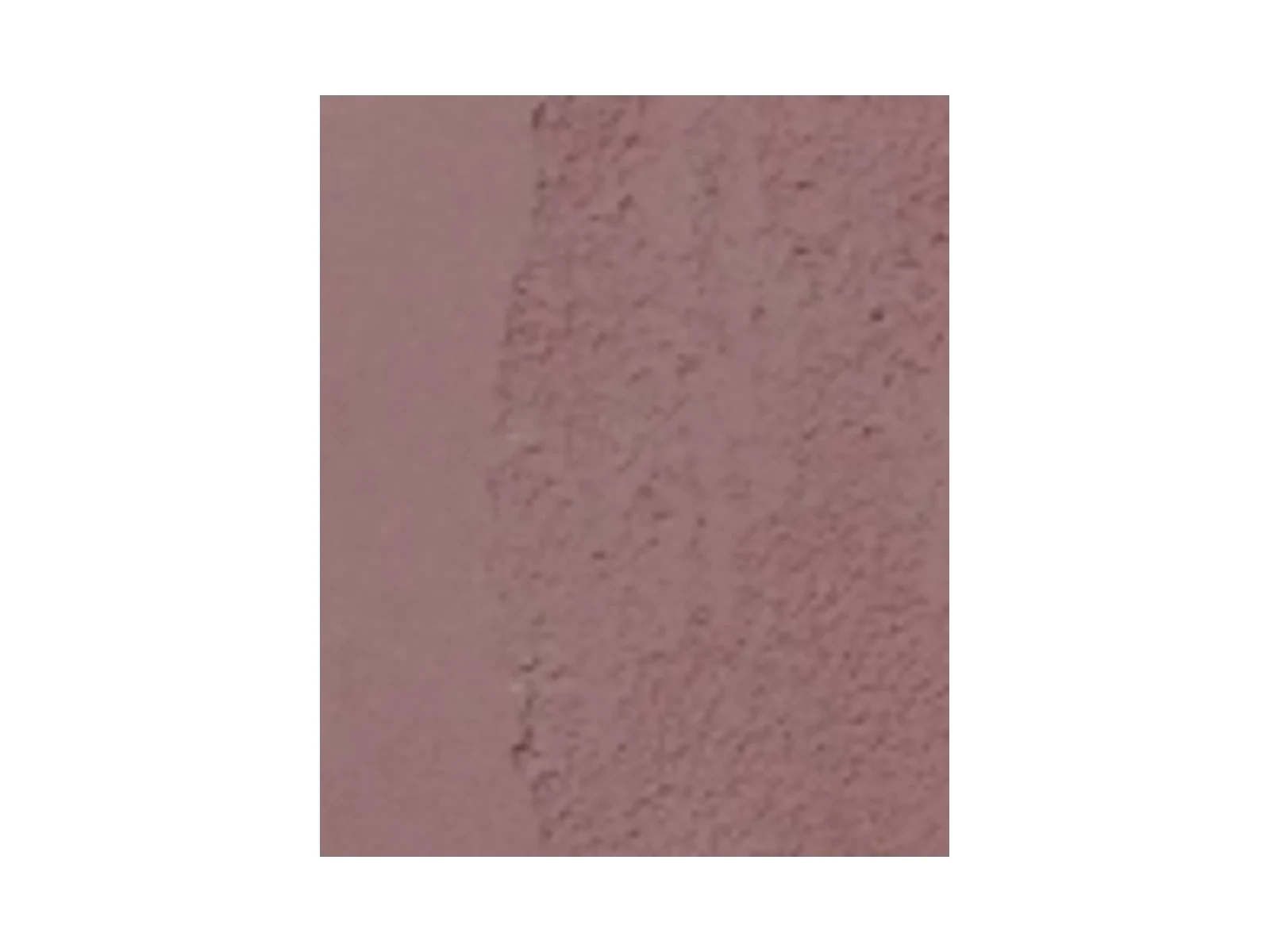
With fine linear-texture flexible stone G0071, examine direction and connections. Across several pieces, joints that interrupt the rhythm or lighting that emphasises grooves may affect the finished wall more than a single close-up suggests.
4. Read thickness, format and colour together
MCM is not one sheet with a universal specification. Catalogue thicknesses and overall dimensions can vary by texture and model. Establish where thickness is measured and whether it includes relief or other construction details. Thickness alone cannot rank the quality of products made with different formulations.
Reference specifications help narrow the choice. Close-up colour images show colour and fine texture, but do not establish that every colour is available in every size. Record the product code, then confirm the intended format, thickness and colour instead of combining separate references into a product that may not exist.
On a curve, panel format also affects how texture changes direction and how pieces meet. On a flat wall, consider joints and repetition first. The material name introduces the category; the design ultimately depends on individual products.
5. Move from a small sample to the complete wall
Look closely at grains, pore-like details, colour and edges, then step back to the normal viewing distance to judge density and direction. Use side lighting to reveal relief and stand the sample upright under light similar to its intended location. A screen close-up cannot do all of this.
Include a mock-up of relevant curves or corners when those details matter. For fire requirements, damp areas or outdoor conditions, obtain information and installation requirements for the selected model. Neither flexibility nor a mineral-based description supplies that evidence.
Shortlist textures in the MCM flexible stone catalogue, then send YEYU the product code, reference images, location, target dimensions, quantity and destination. Include a profile or radius information for a curve, so samples and product details can be discussed specifically.
Contact YEYU. Email: sales@yeyupu.com; WhatsApp: +853 6206 6872.