Start by deciding whether pronounced relief, fine surface texture or continuity around a curve matters most, then compare specific PU and MCM models. There is no need to rank the two materials universally. Similar colours and stone patterns can come from different panel bodies and finishing methods.
A useful comparison gives two candidate products the same wall requirement. Align the reference image, location and approximate dimensions, then examine the appearance each offers and its joining and edge details. Samples and prices can then answer the same question.
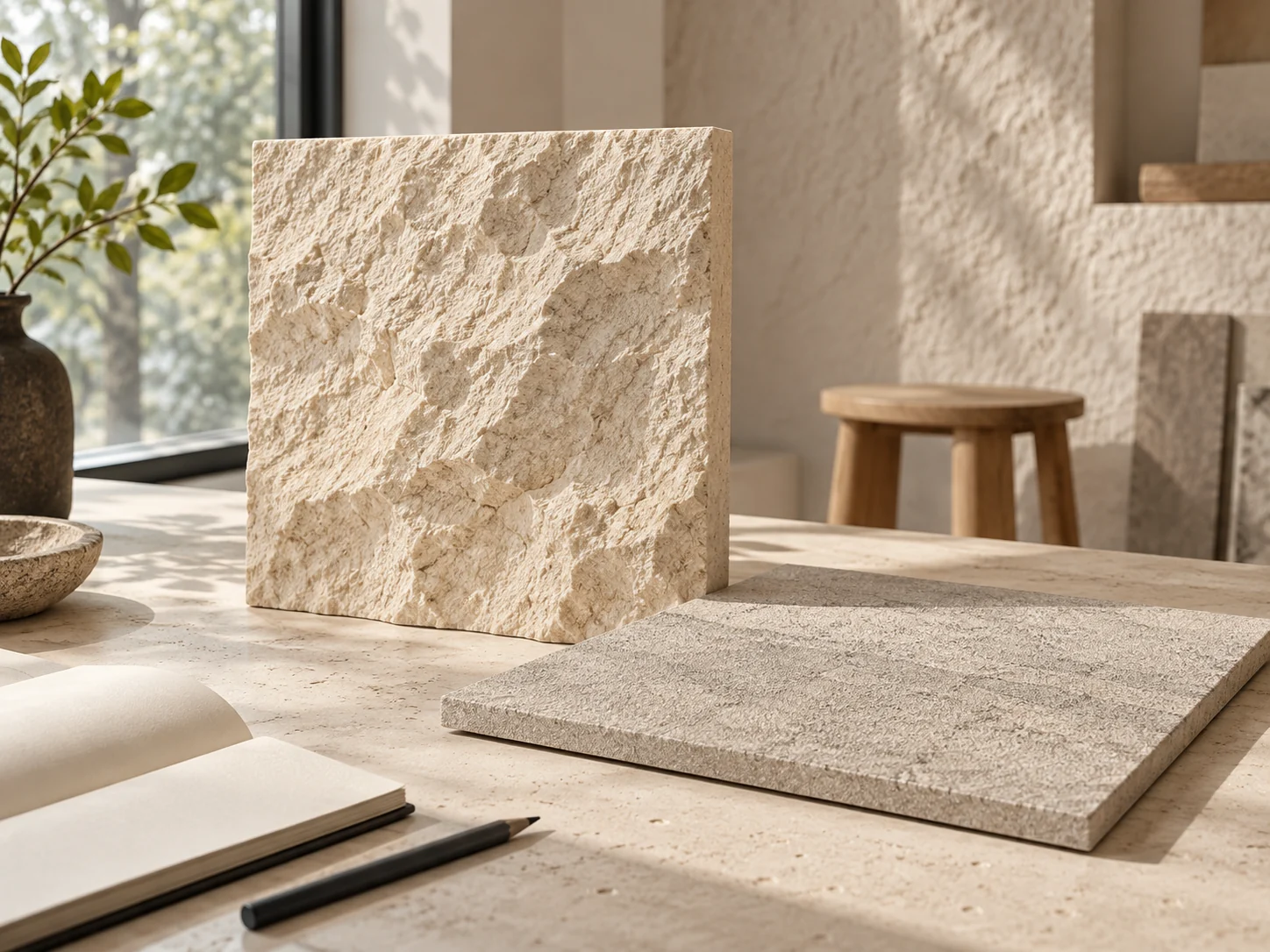
Cover: Illustrative concept: contrasting textures on a material workbench; confirm the actual materials with samples and product information
1. Put the design priorities in order
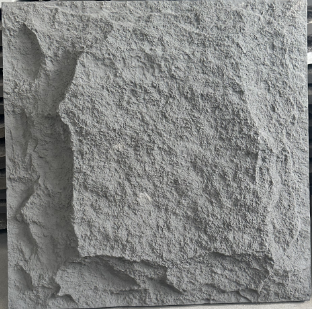
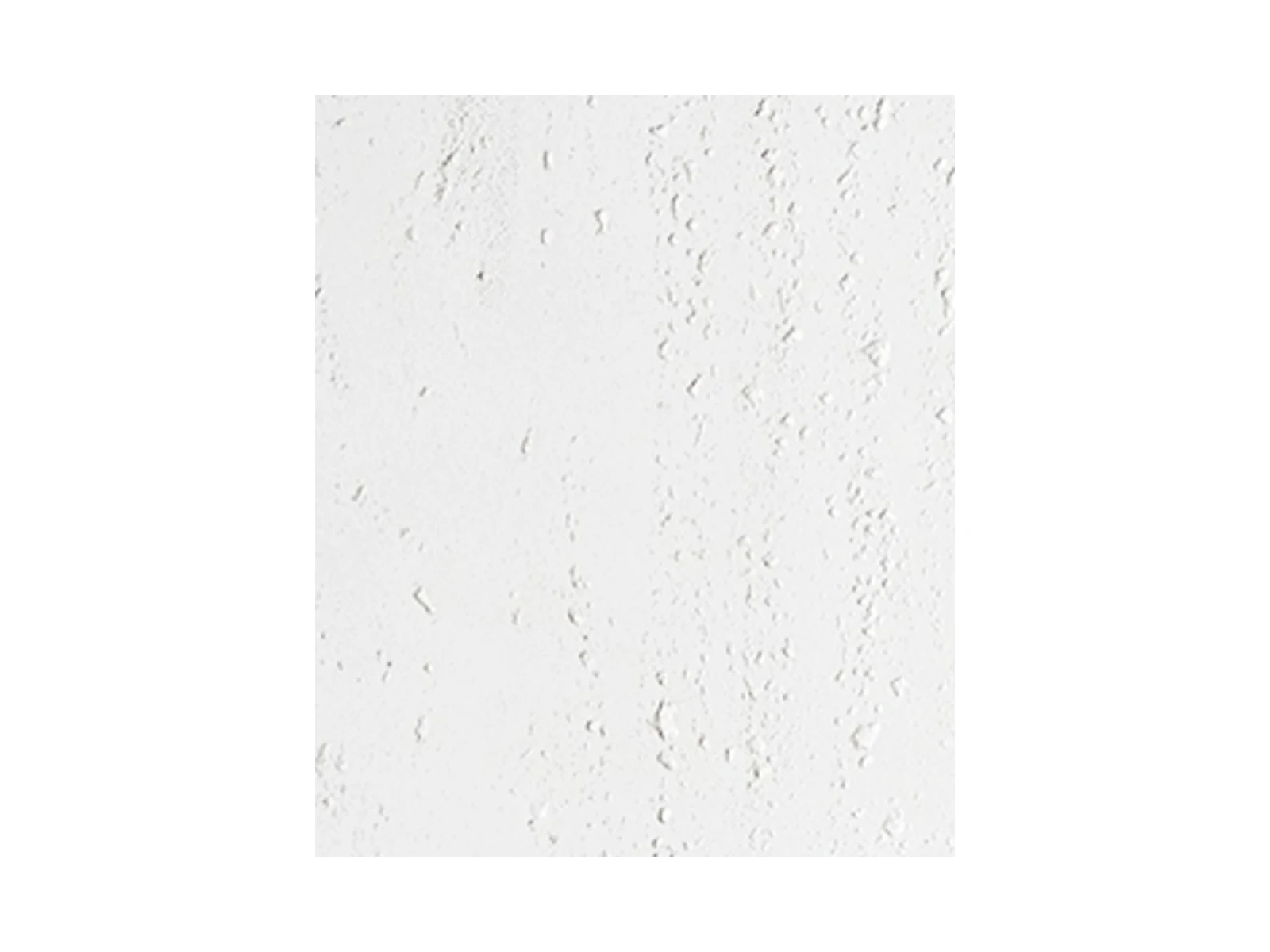
If rock layers, blocks and shadows are the main priority, begin with PU panel formats offering those profiles. If mineral-like surfaces, pores, rammed earth or fine lines matter more, include corresponding MCM textures. This narrows the search; it does not mean a texture can exist in only one material.
Decide which aspect matters most: close-range detail, whole-wall rhythm, continuity on a curve, or junctions with openings and adjacent materials. With a clear priority, you know what to examine first when samples arrive instead of repeatedly changing direction after seeing another photograph.
A small shortlist is enough to begin. Compare the products under the same light and against the same wall proportions. Retain the closest matches before moving to specifications and quotations.
2. Record specific products in the same comparison table
PU uses a polyurethane material system; MCM is a mineral-based composite finish. Their material bases differ, and products within each range also vary. Fill in the following points for individual models rather than treating them as universal statements about all PU or all MCM.
| Comparison | Record for each candidate | How it helps |
|---|---|---|
| Material and construction | Body, surface, back and any backing present | Check that the sample and information describe the same finished product |
| Texture and profile | Relief, fine details, colour and full panel format | Identify whether the product preserves the design priority |
| Curve conditions | Permitted direction, radius and relevant use conditions | Check against the actual project curve |
| Layout and coverage | Effective coverage, joints, repetition and edges | Understand the wall appearance and basic quantity |
| Quotation scope | Model, specification, quantity, accessories and delivery scope | Establish whether the two quotations are comparable |
Ask the factory for missing information. Mineral-based does not establish a common fire classification, and PU does not establish every product's weight or hardness. Another brand's test results cannot stand in for information about the candidate product.
3. For curves, establish the radius first
Asking which material is softer does not define a curved-wall requirement. A column and a broad curved wall may require different deformation. Concave or convex profiles and texture direction can also affect the surface and joints. Draw the profile first, then assess the finished product.
A PU panel designed with a fixed shape cannot be assumed bendable because it is called soft stone. Where greater bending is required, consider MCM flexible finishes intended for that curve, while checking the selected model's permitted radius, direction and installation conditions.
When comparing curved mock-ups, examine texture, edges and connections after bending. Seeing material bent once is a narrower observation. Record heating, grooving or any other treatment; a processed demonstration does not establish that the unchanged finished product can be used in the same way.
4. Let samples and complete walls answer different questions
A small sample shows local colour, feel and detail. A whole panel shows scale and edges, while several panels reveal repetition and joints. Keep those levels distinct. A flattering close-up of one product and a complete installation photograph of another do not offer an equal comparison.
Consistent side lighting is useful too. It may emphasise the blocks in a PU rock profile or the direction of an MCM linear texture. Assess how each selected product responds to the intended light, beyond which material photographs more dramatically.
Where a project specifies fire performance, emissions, damp locations or outdoor use, give both candidates the same requirements. Review each finished product's supporting information and installation construction. Without relevant evidence, the material category cannot establish compliance.
5. Compare ways to complete the same wall
Different per-panel prices may reflect different formats, coverage or quotation scopes. Align the target area and specifications first, then review panel quantities, joining and edge materials, substrate conditions, packing and transport scope. Avoid a universal waste allowance or assuming that unquoted items are included.
Browse the PU catalogue and MCM flexible stone catalogue, keeping a small shortlist from each. Send YEYU the models or reference images, wall dimensions, quantity and destination. Include a profile for a curve, so samples and quotations address the same design.
Contact YEYU. Email: sales@yeyupu.com; WhatsApp: +853 6206 6872.